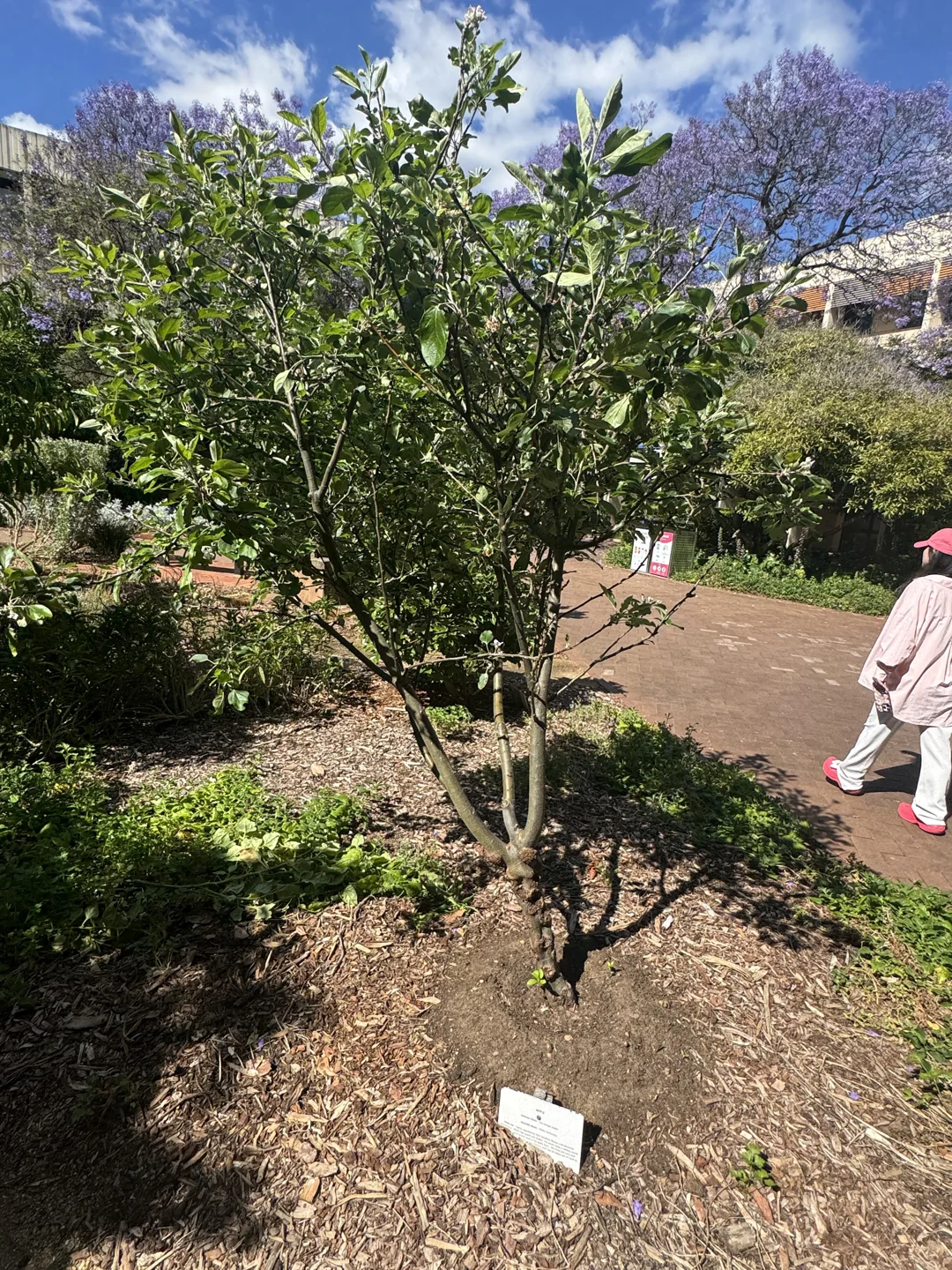
Apple
Malus domestica
The sign names this variety Cox’s Orange Pippin and describes its fruit as juicy and aromatic, with a nutty flavour. It can be eaten fresh or used for cider. The planting diagram marks apples at points 1, 13 and 14.
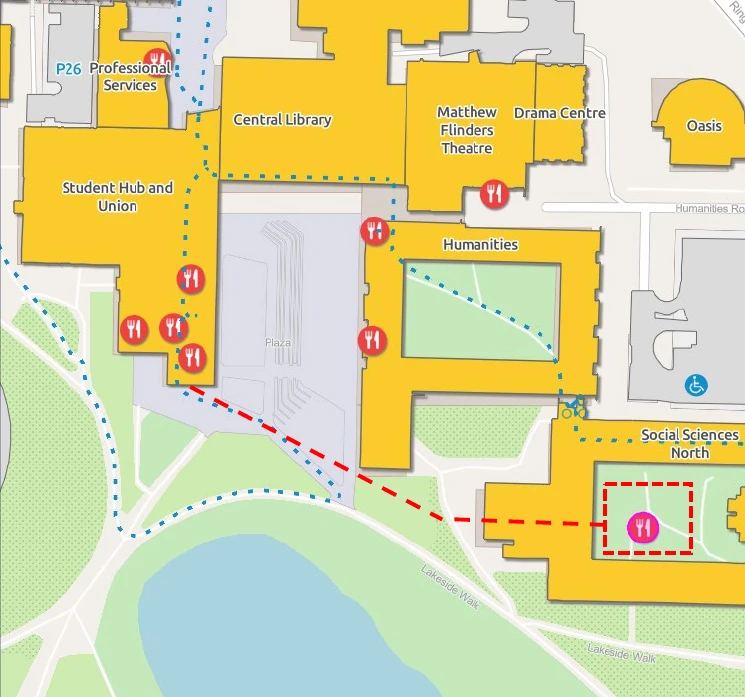
Social Sciences North · Bedford Park
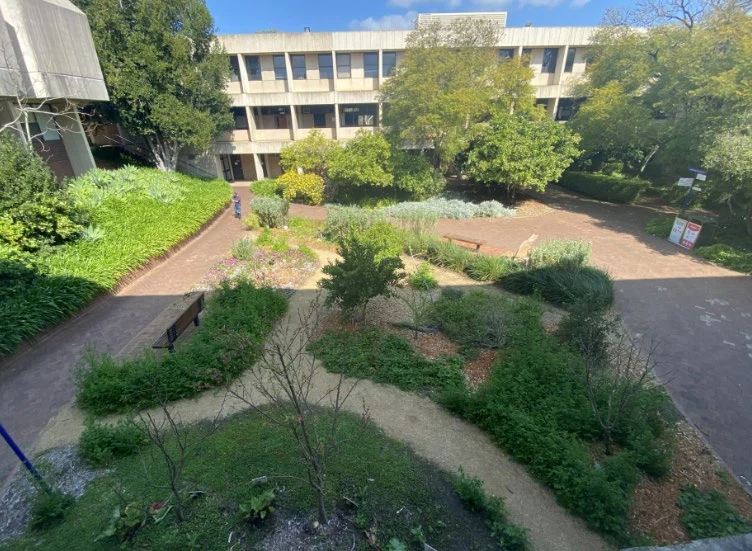
Social Sciences North courtyard
Bedford Park campus
Flinders University reported work to prepare the courtyard beds in 2019. The garden opened in 2020, building on edible plants already growing in the courtyard.
The project was part of the university’s plan to grow more food on campus. The garden sign describes the courtyard as a place to grow food, spend time outdoors and connect with others on campus.
Planting point numbers match the diagram on the courtyard sign.
Malus domestica
The sign names this variety Cox’s Orange Pippin and describes its fruit as juicy and aromatic, with a nutty flavour. It can be eaten fresh or used for cider. The planting diagram marks apples at points 1, 13 and 14.
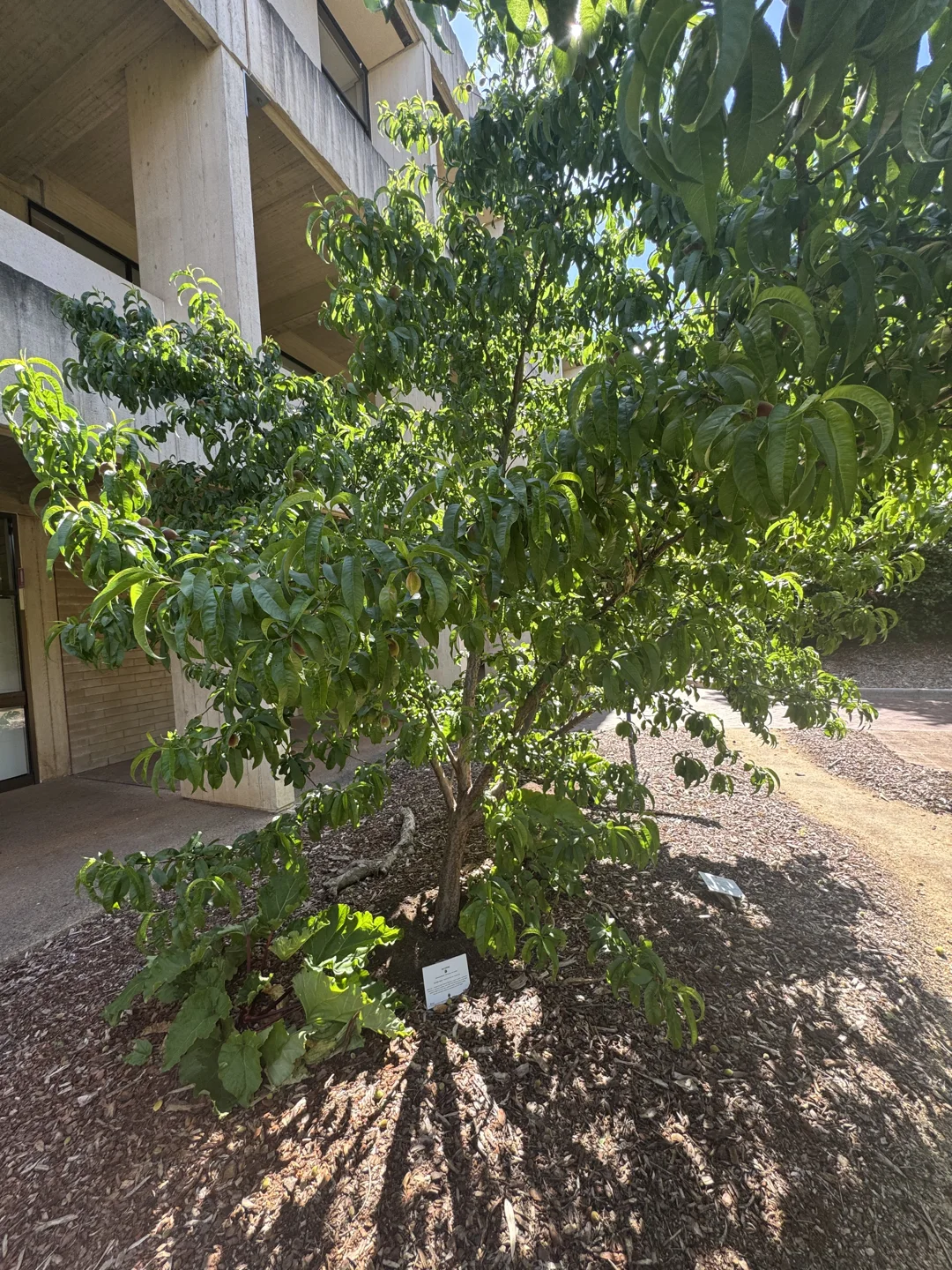
Prunus persica var. nucipersica
Planting point 2. The sign gives the name “No Bubble, No Trouble” and lists late February as its usual ripening time. The fruit can be eaten fresh or used in baking and fruit salads.
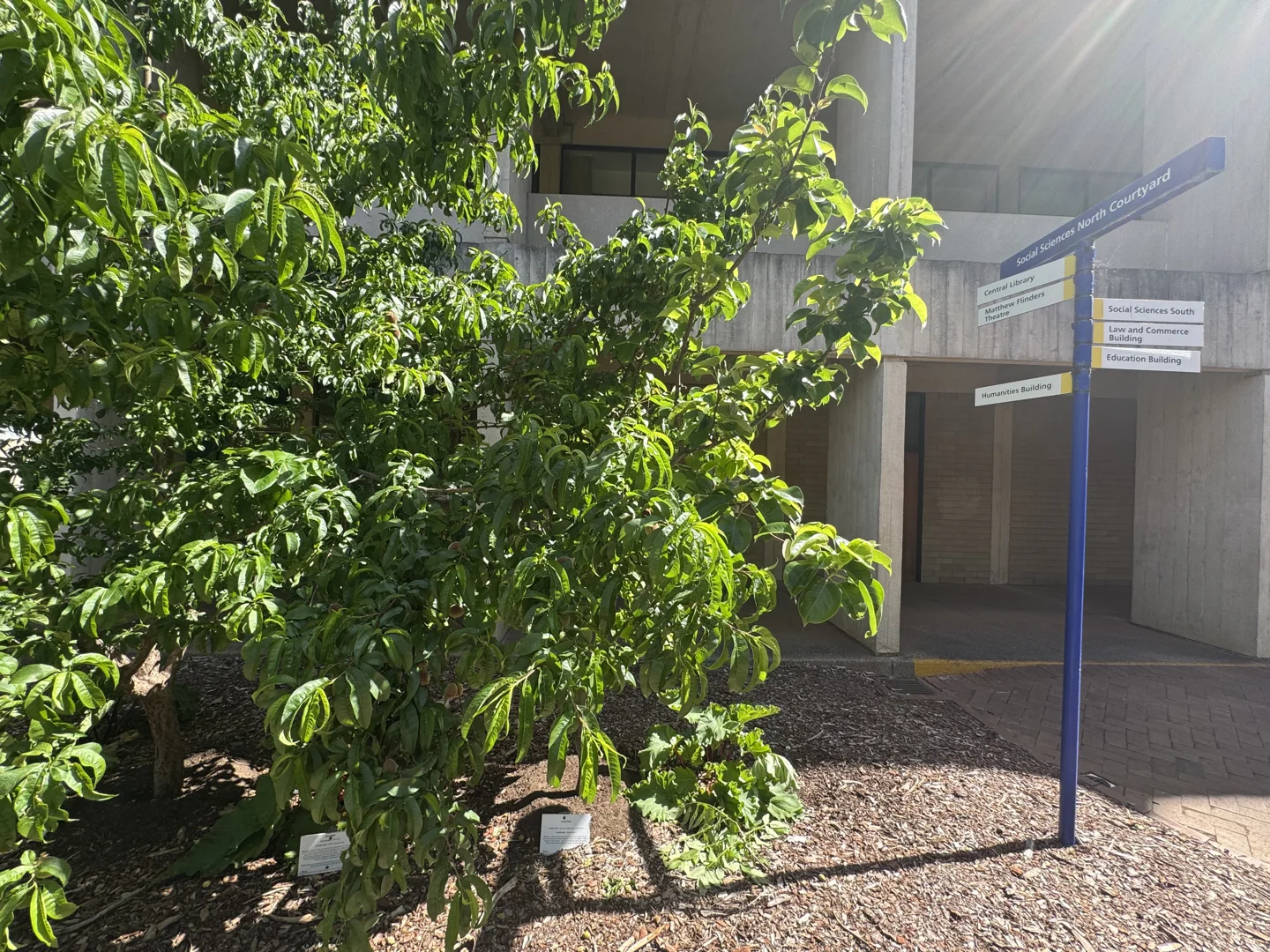
Pyrus pyrifolia
Planting point 3. The sign also calls it an Asian pear or apple-pear. This East Asian fruit can be eaten fresh, poached or added to salads and chutneys.
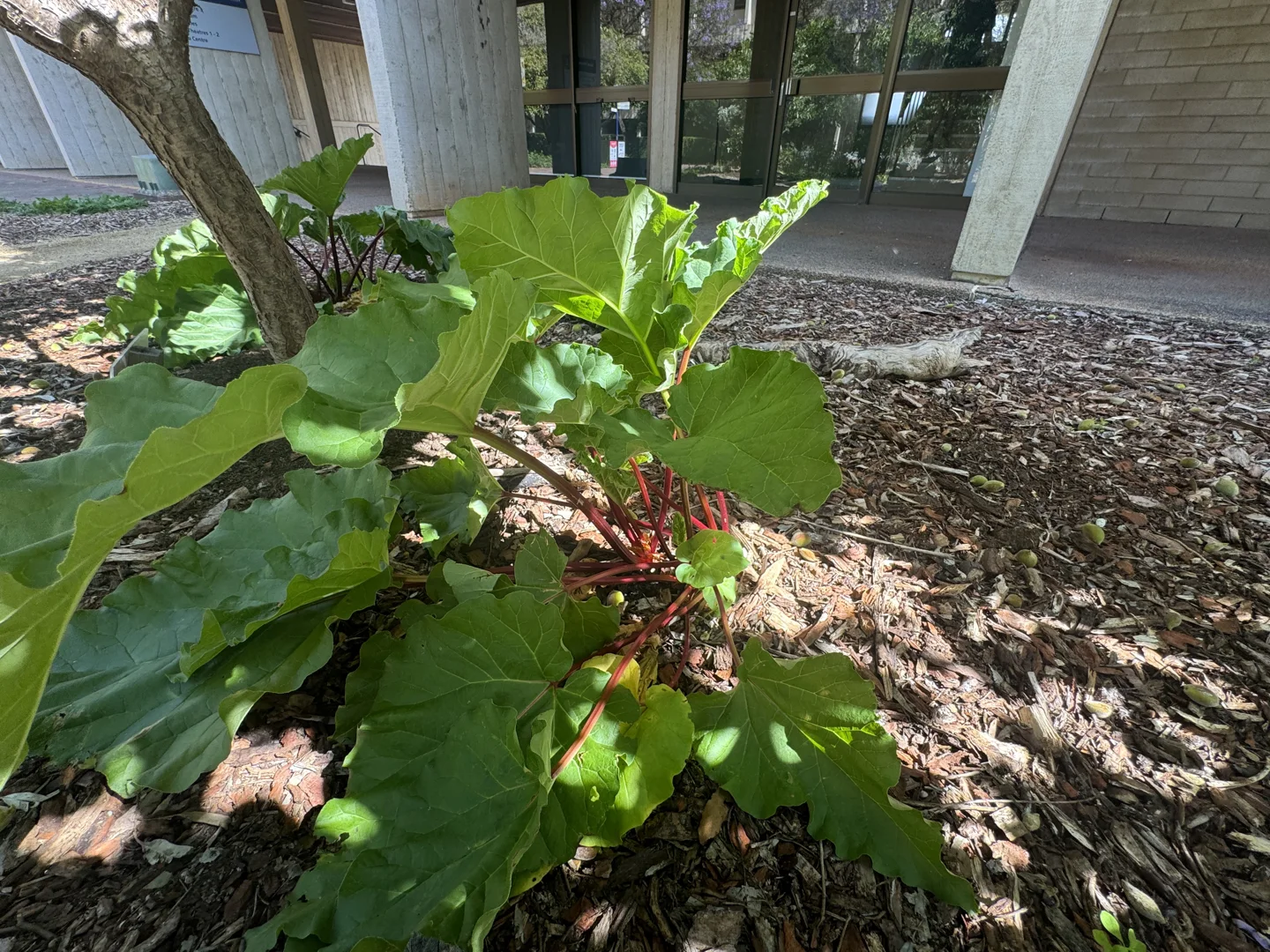
Rheum rhabarbarum
Planting point 4. The sign describes using the stalks in sauces, jams and pies. Harvest only the stalks. Rhubarb leaves are poisonous and should never be eaten.
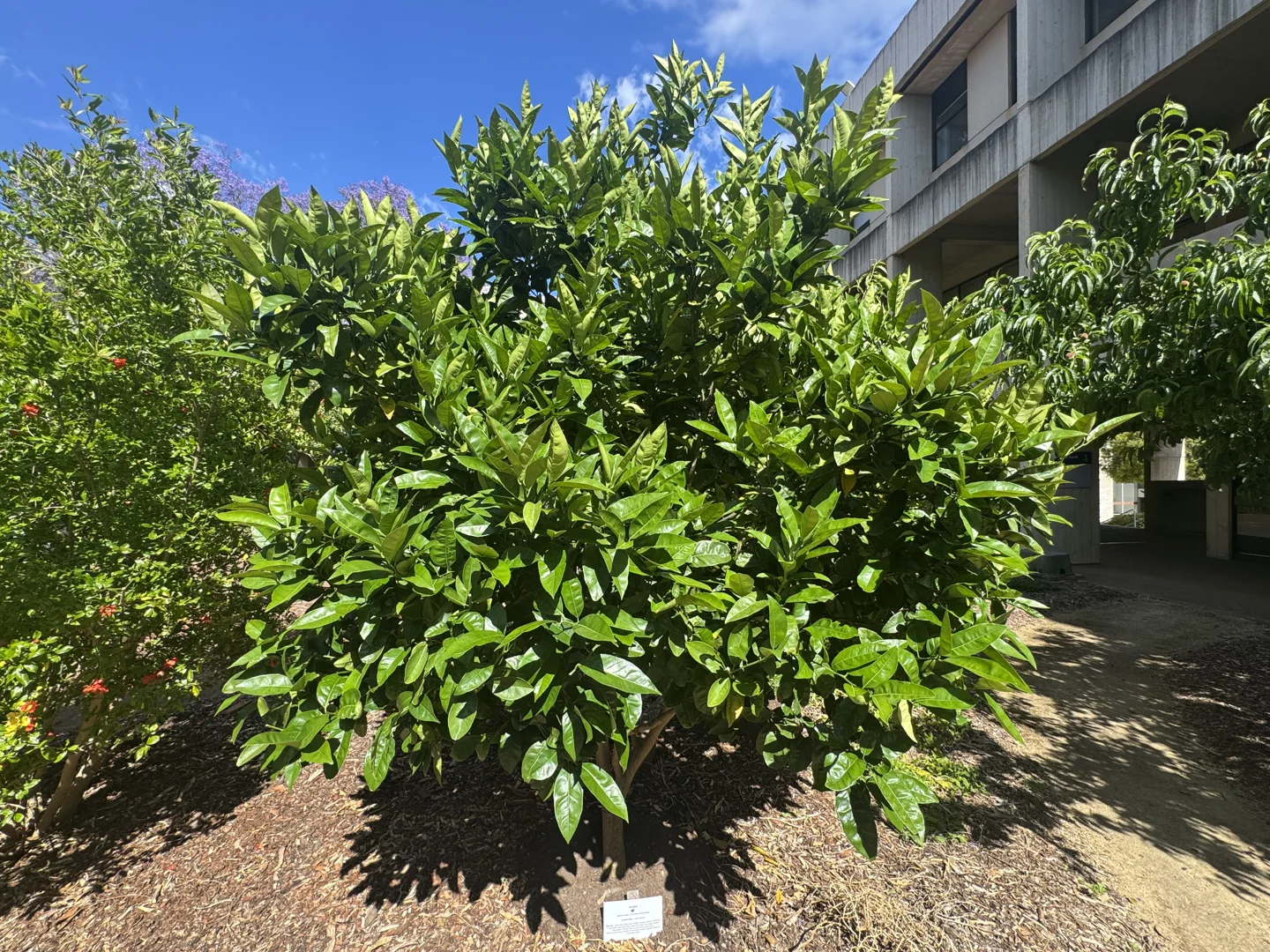
Citrus sinensis
Planting point 8. The sign identifies this tree as Washington Navel orange. It describes seedless fruit that ripens in midwinter and suggests eating it fresh or adding it to salads.
Kunzea pomifera
Planting point 15. The sign also calls this plant emu apple and lists the Indigenous names Munthari, Munta, Mantirri and Mantar. It suggests using the fruit fresh or in jams, chutneys and baked dishes.
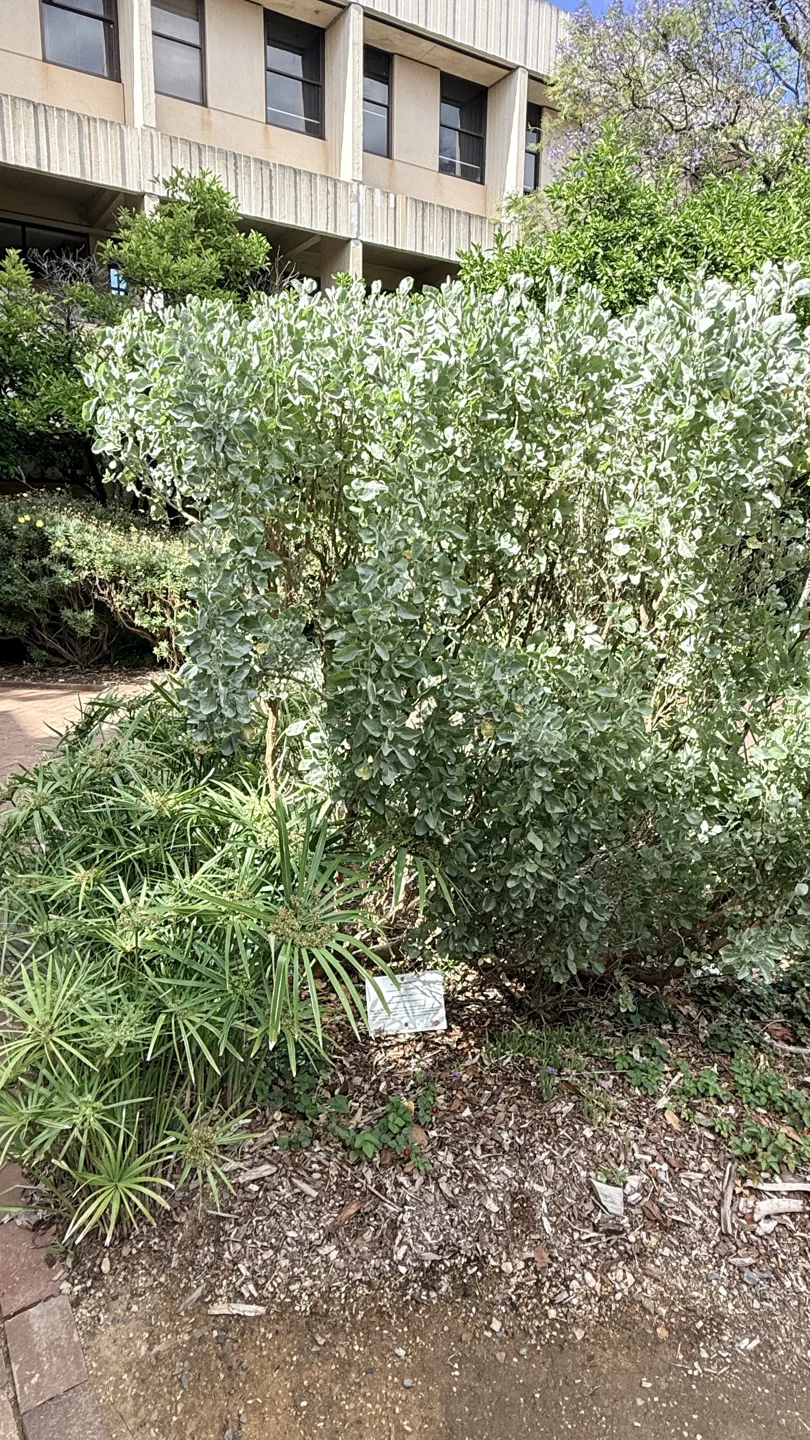
Atriplex nummularia
Planting point 17. The sign lists Purngep and Binga as Indigenous names. It describes blanching or sautéing the leaves, using dried leaves as a seasoning, and adding roasted seeds to dukkah.
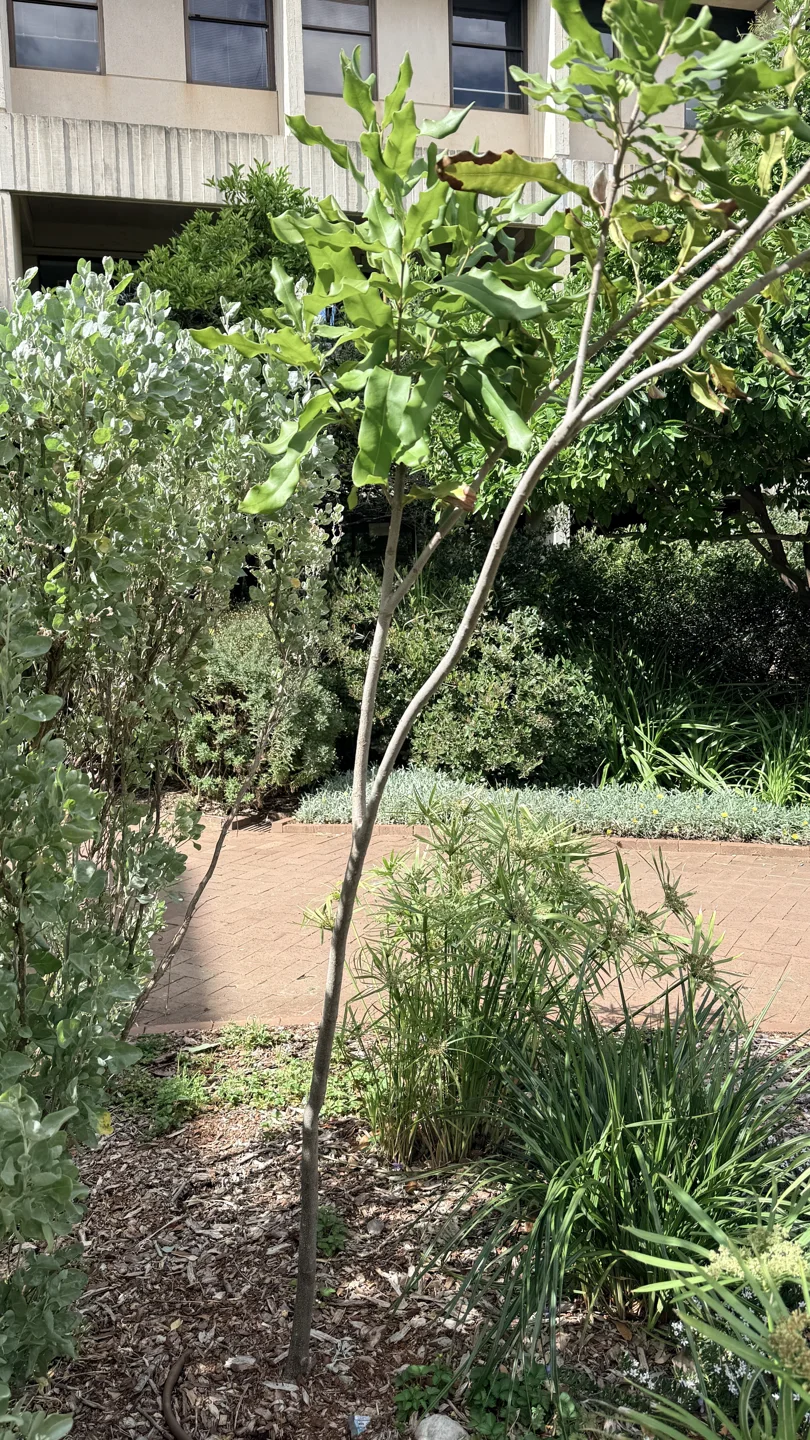
Macadamia spp.
Planting point 21. The sign lists Kindal Kindal, Boombera, Jindilli and Gyndl as Indigenous names, and names Macadamia integrifolia and Macadamia tetraphylla. It describes using the nuts whole, ground for baking or pressed for oil.
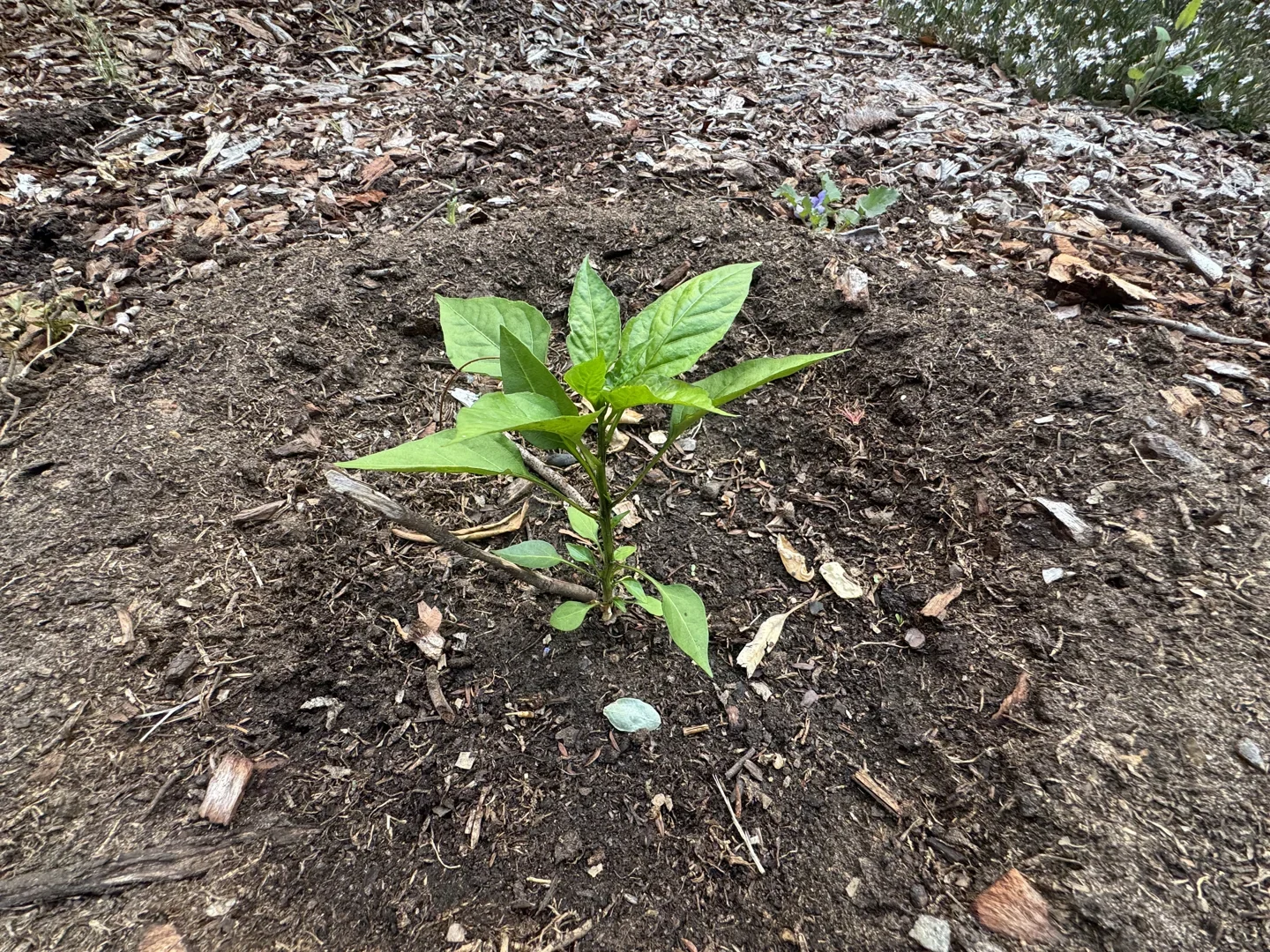
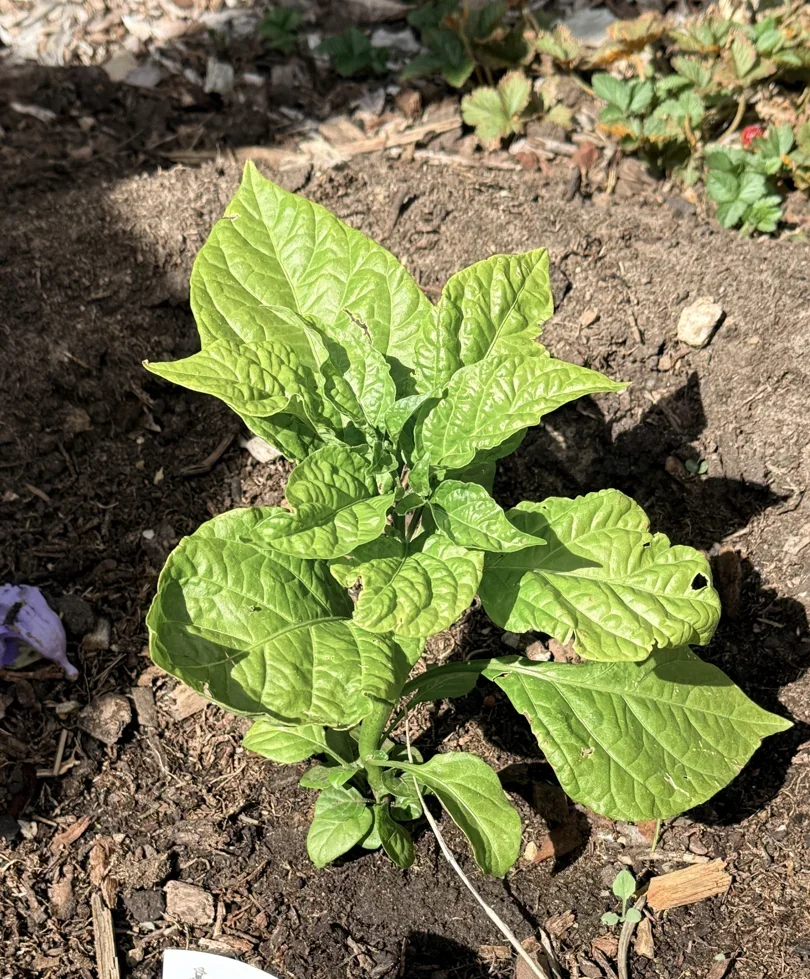
Capsicum spp.
The tags identify the seedlings as Thai chilli and Habanero Mustard.
Take a break on a courtyard bench or stop to look at the plantings. The garden sign welcomes harvesting when you can positively identify both the plant and its edible part. If you are unsure, leave it growing and ask the Flinders Sustainability team.
The on-site Edible Garden sign records the opening year and planting list. The plant descriptions draw on the individual garden signs and tags. The route and courtyard photo are from the garden directions handout.
What worked well on your visit? What could make this garden easier to find, use or enjoy? Please leave out names and contact details.