Pause by the gazebo
Stop in the shade of the timber shelter near the garden. It’s a spot to take a breather or catch up with a friend.
Flinders Living precinct · Bedford Park
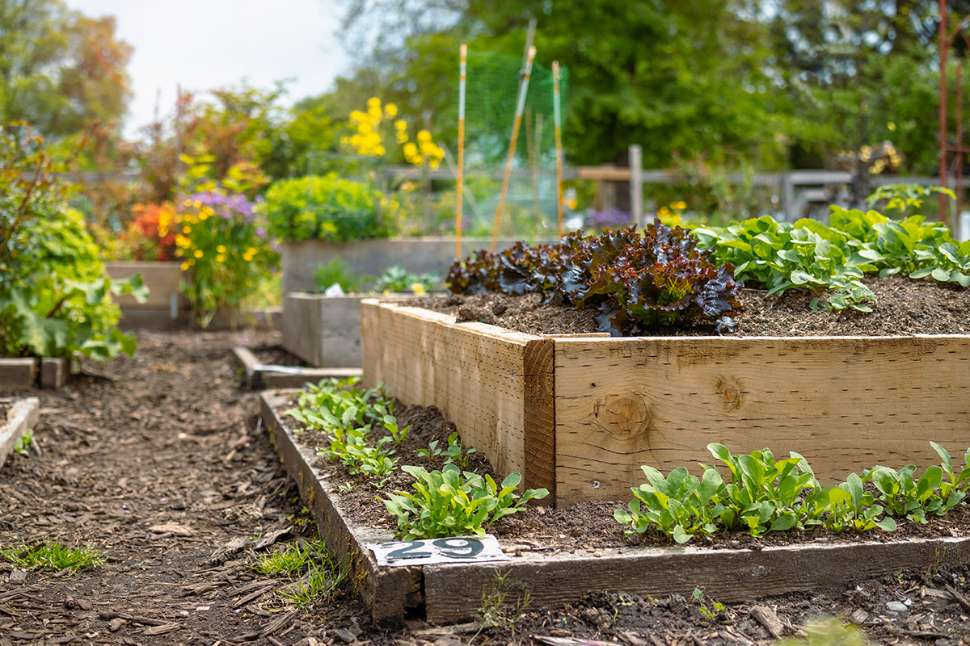
Photo from Flinders University
Flinders Living precinct
Near Sturt Drive and Hall Terrace
Bedford Park SA 5042
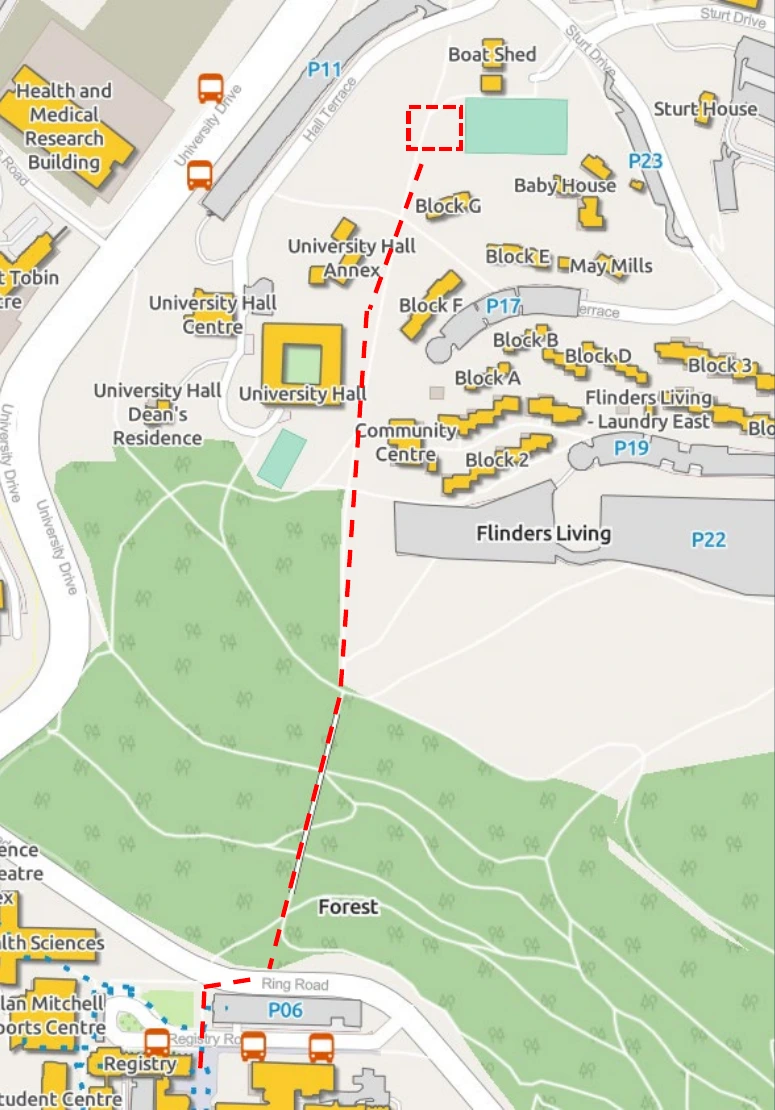
Stop in the shade of the timber shelter near the garden. It’s a spot to take a breather or catch up with a friend.
Take a seat on the wooden bench among the trees, or pause by the curved low wall tucked between the plantings.
Take a slow walk and look out for the changing leaves, flowers and fruit. You’re welcome to come on your own or bring someone along.
If you’d like to lend a hand, check the garden whiteboard for current tasks. You can leave a note there too. The chalkboard inside the shed has a tree map and an equipment list.
Email the Flinders Sustainability team to ask about:
A group of Flinders University students started the garden in 2001 so students, staff and neighbours could grow fresh organic food together and learn to care for the land sustainably.


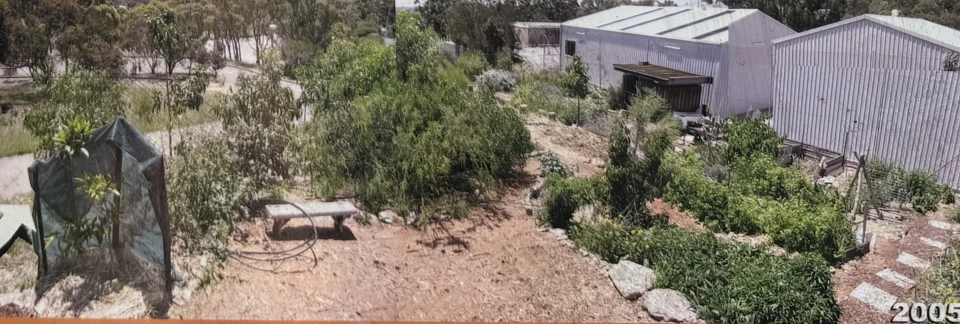
Volunteers have shaped and maintained the garden using permaculture principles. The garden has hosted workshops, festivals, tours, education programs and group working bees.
The garden sign acknowledges support from Urban Forest and the Marion and Mitcham councils.
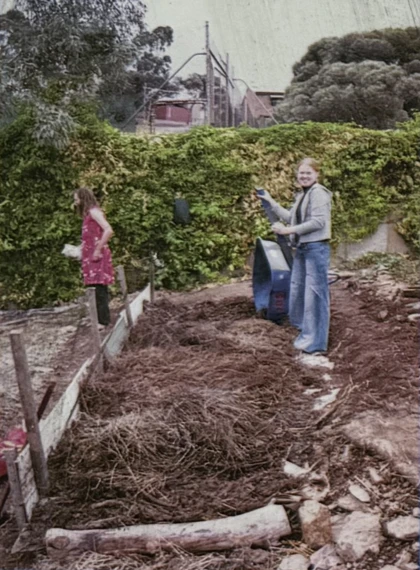
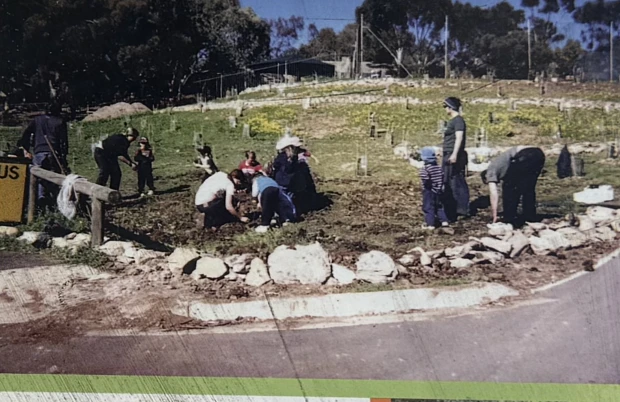
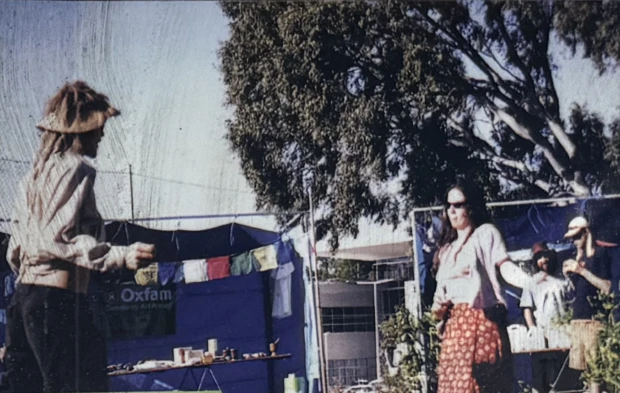
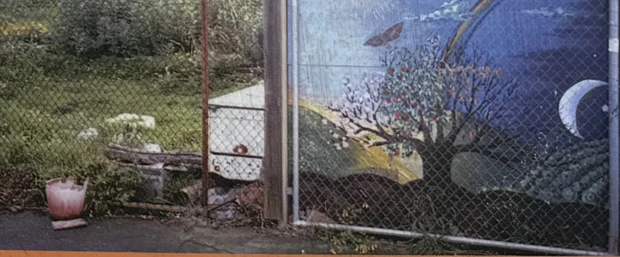
Photos cropped from the on-site Flinders University Community Garden sign. Select any photo to see it at full size.
The garden sign describes three planting areas on the slopes around the Grounds and Maintenance complex.
Native plants and vegetation regeneration.
An orchard of fruit trees.
Vegetable beds and an orchard of tropical fruit and nut trees.
Match the photos to the visible clues. For harvest, use the garden labels or ask the garden team to confirm the plant.
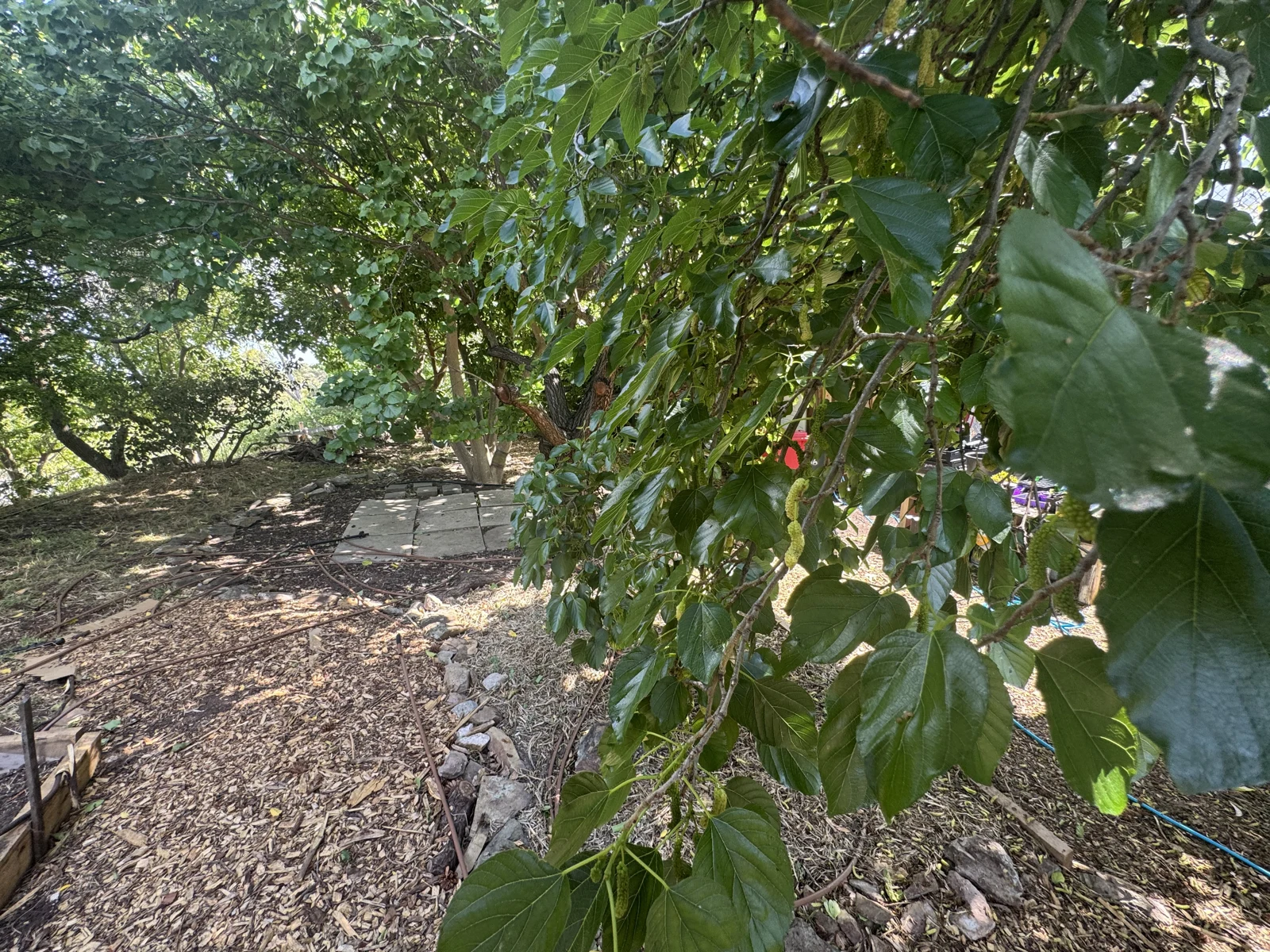
Strong genus match Morus spp.
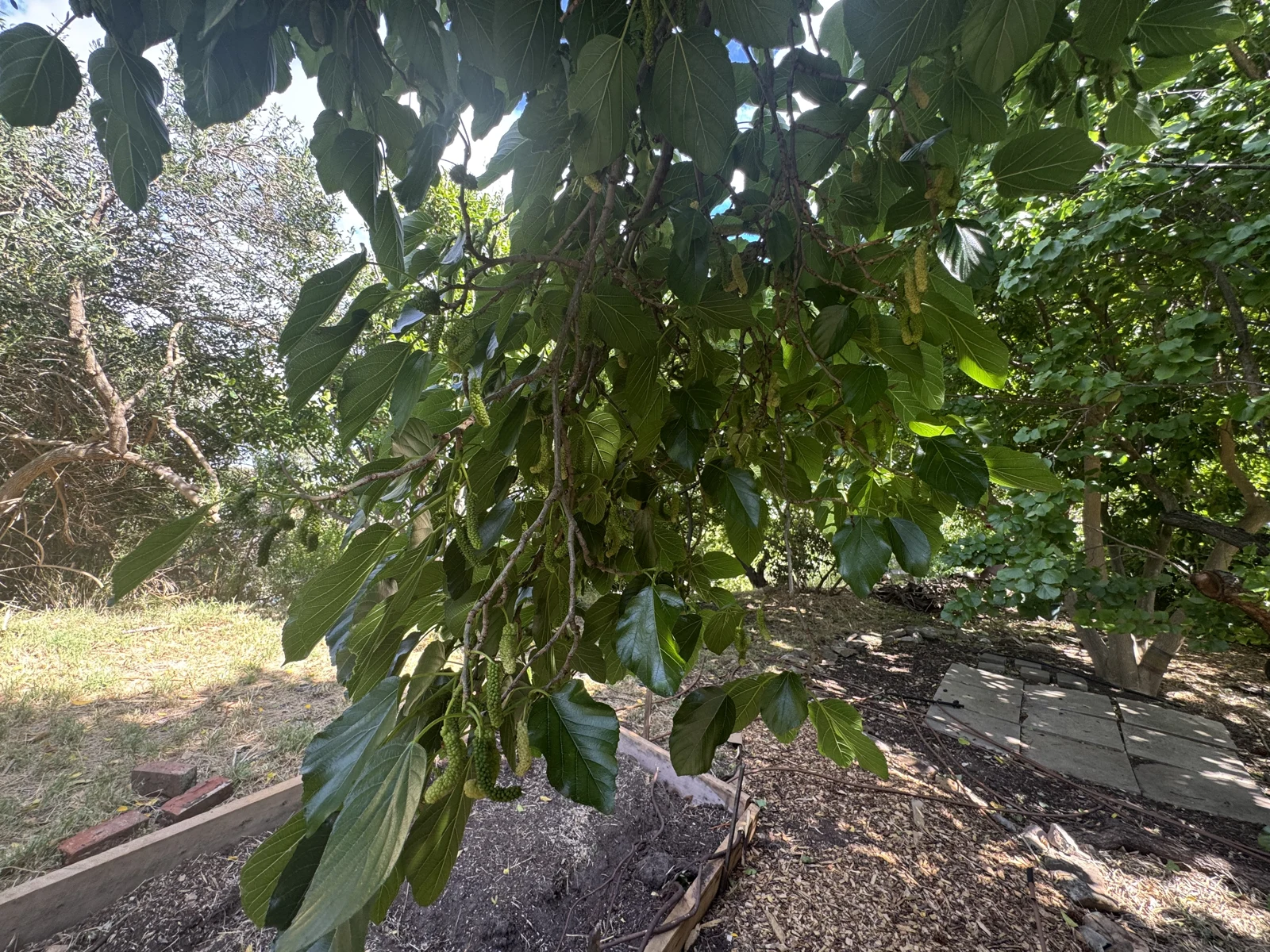
Look for toothed, heart-shaped leaves and elongated fruits made up of many small segments. The garden noticeboard also records mulberries.
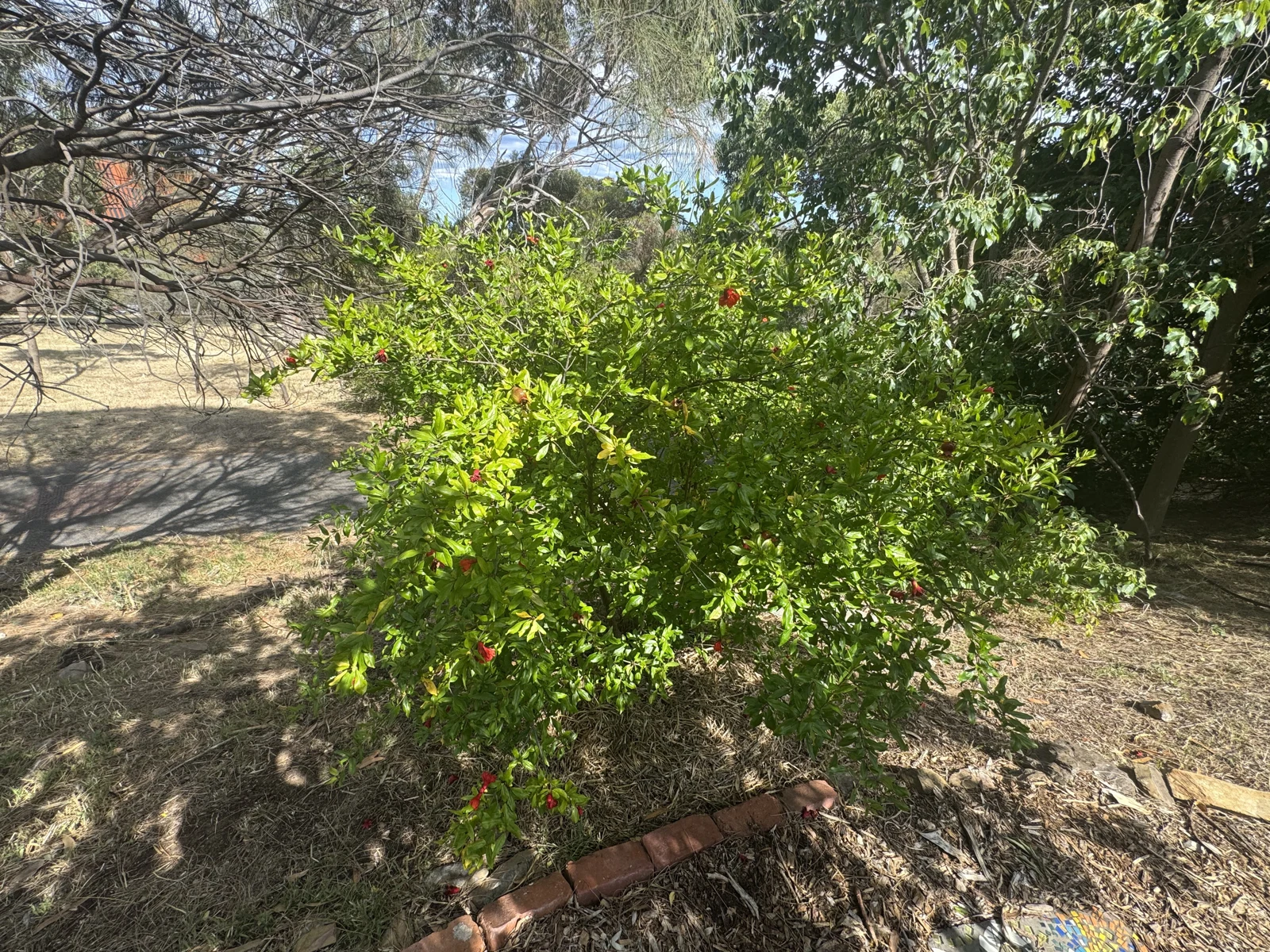
Likely species Punica granatum
The woody shrub has glossy, narrow leaves and orange-red flowers with thick bases. Check for a round fruit with a persistent crown to confirm.
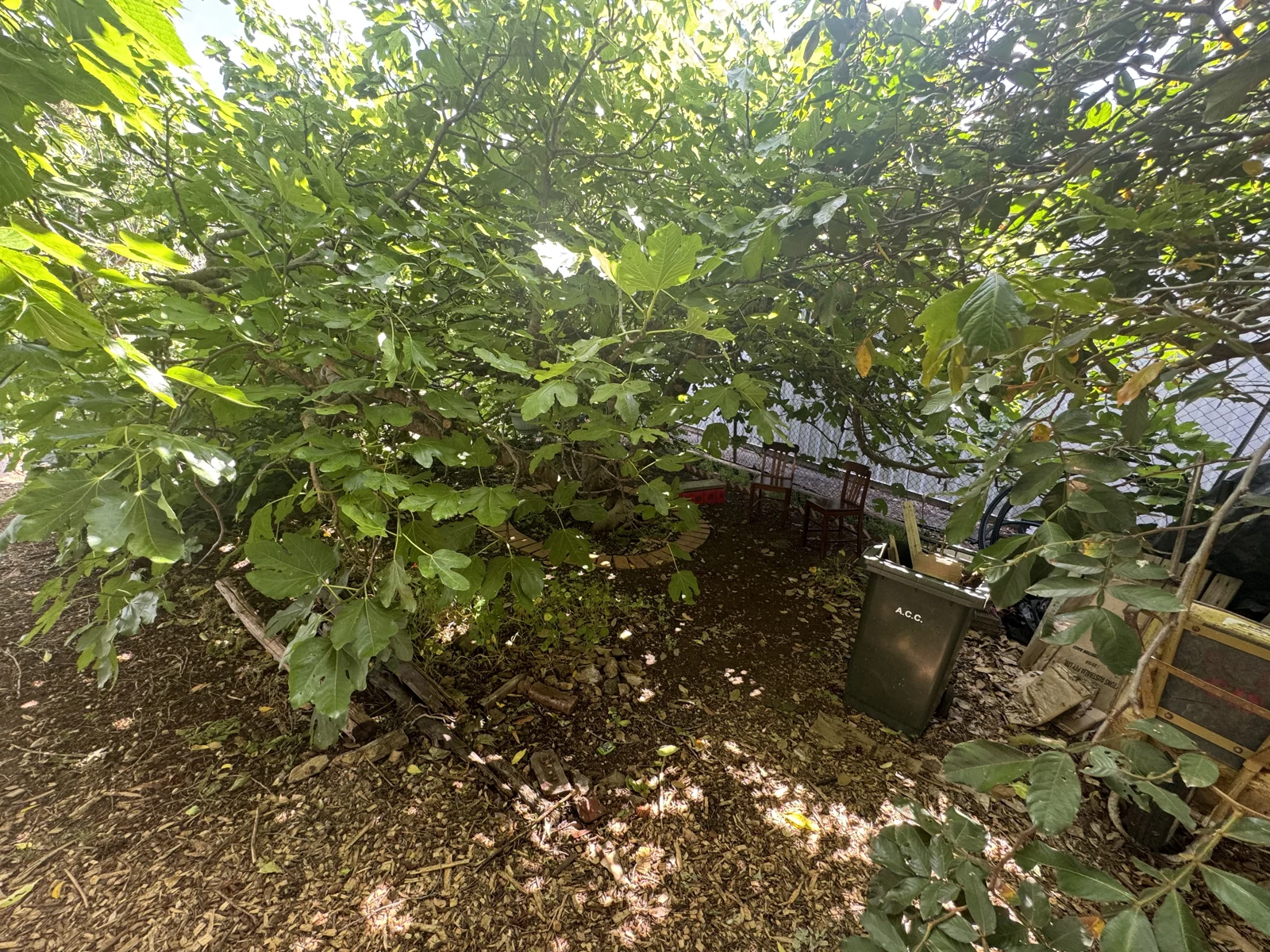
Likely species Ficus carica
The broad leaves have deep, rounded lobes. A close-up of a fig at a leaf joint or a garden label would confirm the identification.
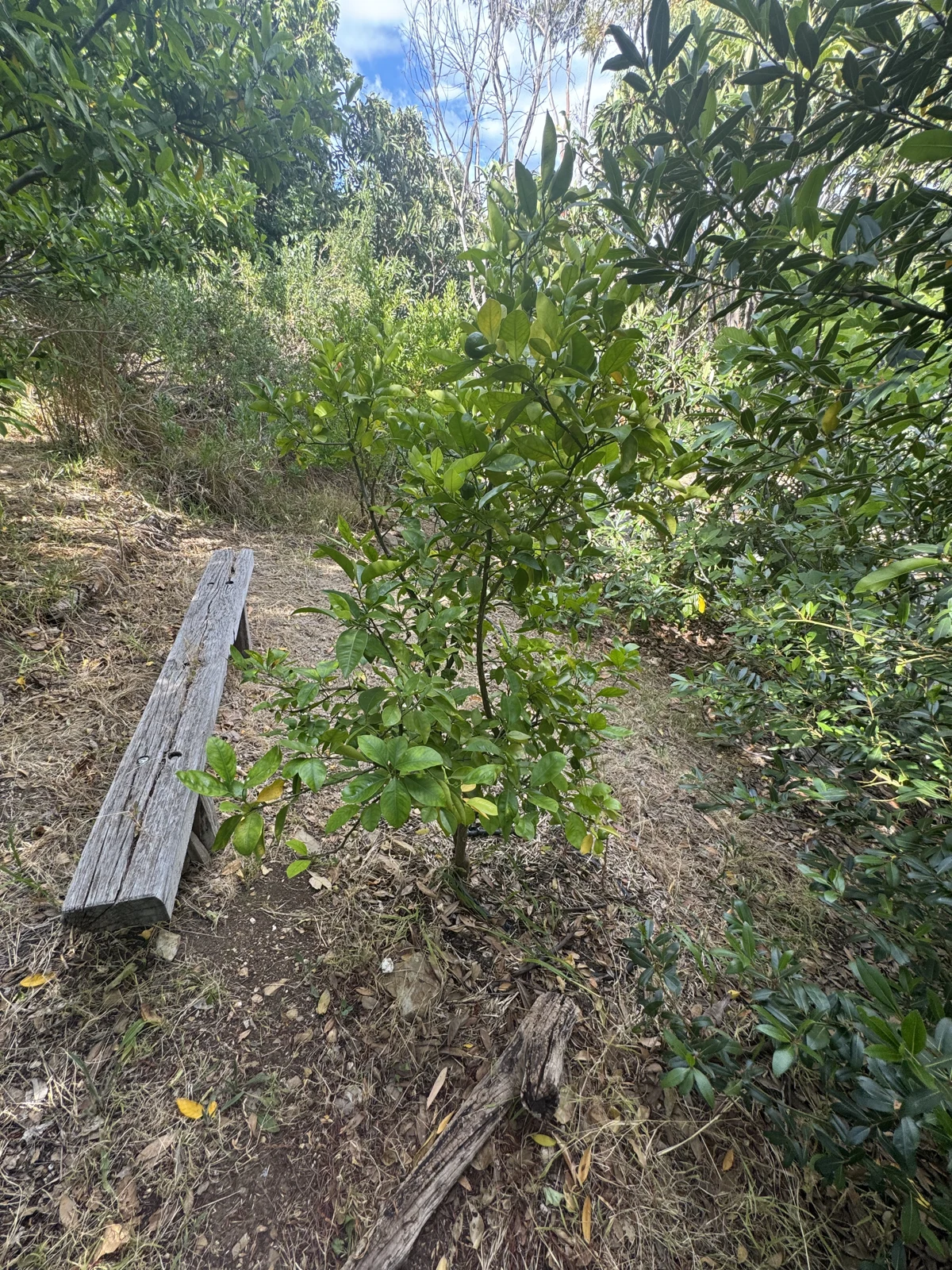
Likely genus Citrus spp.
The small tree beside the bench has glossy leaves and round green fruit. The photo gives too little detail to distinguish a lime, lemon or another citrus.
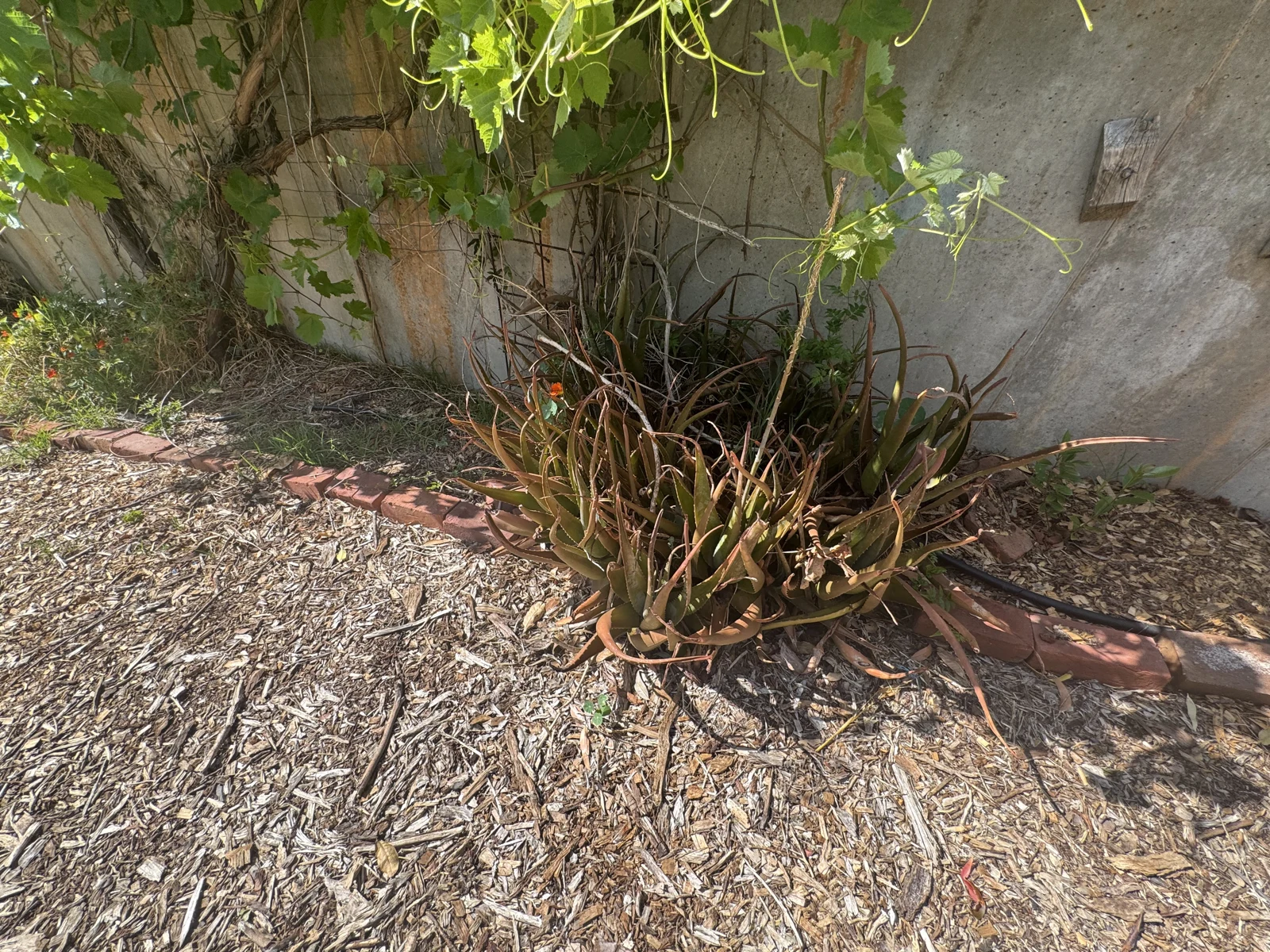
Vitis spp.
Look above the succulent for woody climbing stems, curling tendrils and toothed, lobed leaves.
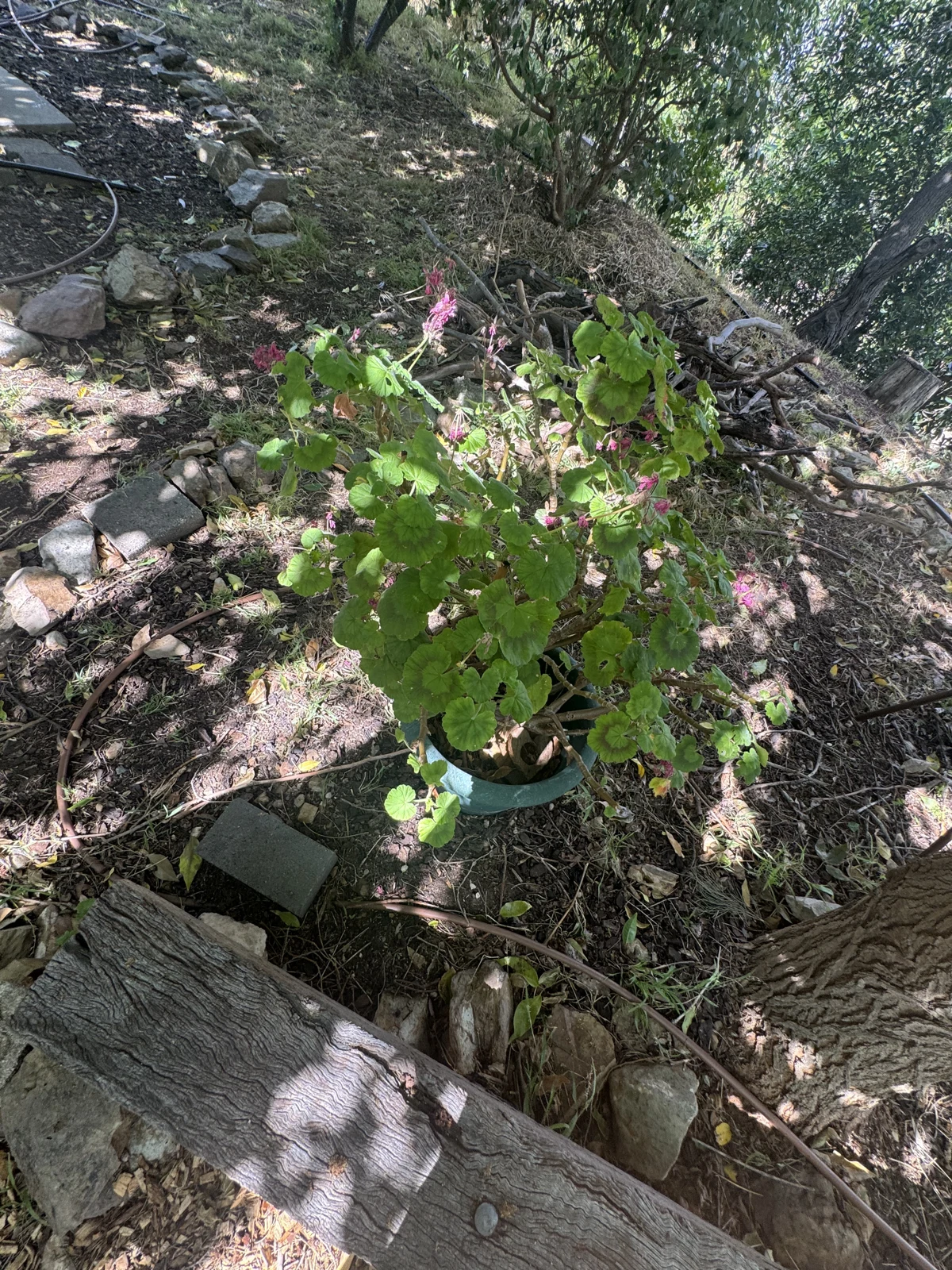
Likely genus Pelargonium spp.
The potted plant has rounded, scalloped leaves and pink flowers clustered at the ends of long stalks. It resembles a zonal pelargonium.
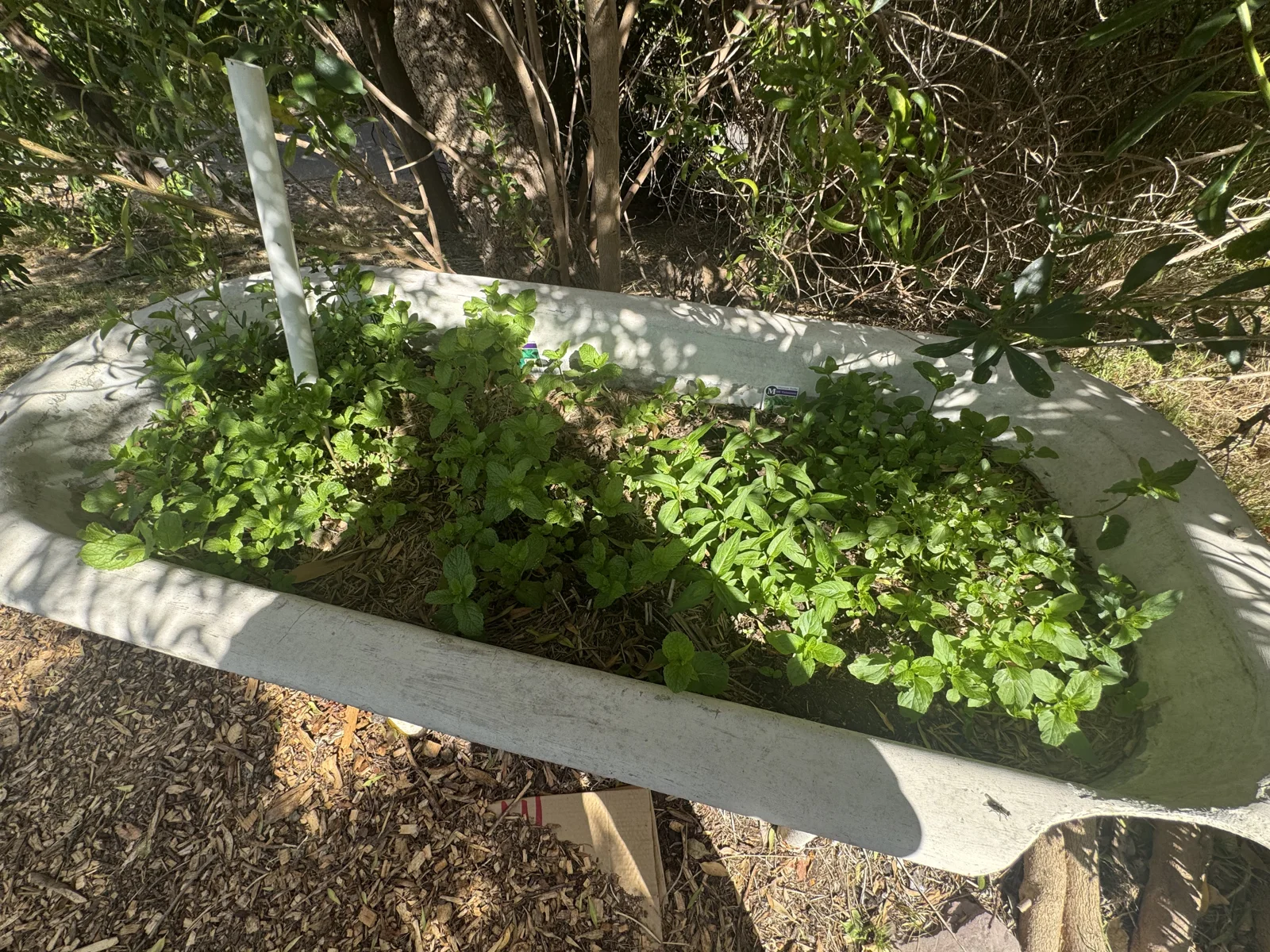
Likely genus Mentha spp.
The bathtub planter contains plants with opposite pairs of toothed leaves. A closer photo of the labels would help distinguish the mint varieties.
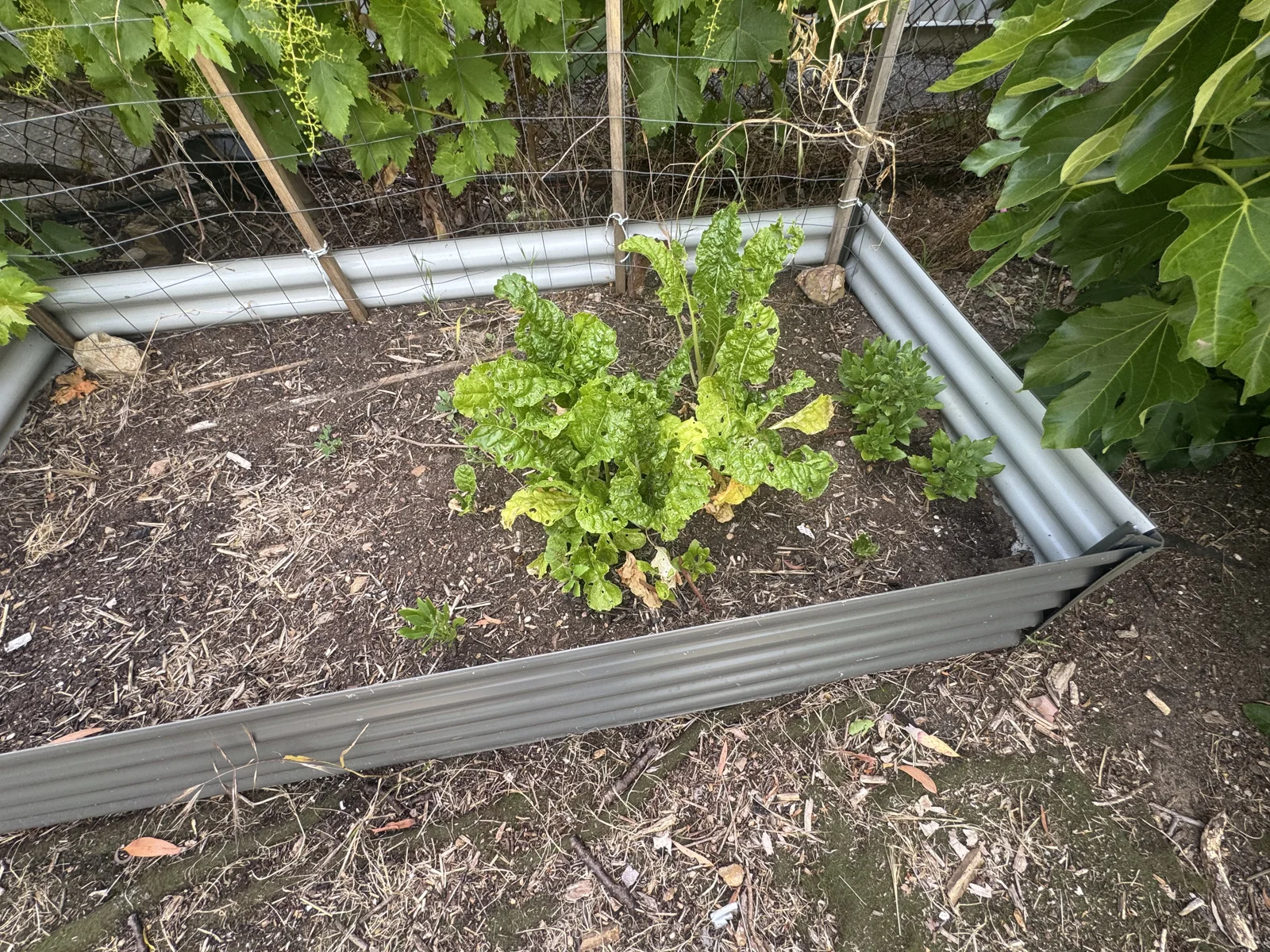
Likely crop Beta vulgaris (chard group)
The plant in the centre of the raised bed has large, crinkled leaves with prominent pale midribs.
Identification reference: NC State Extension Gardener Plant Toolbox.
Garden history and slope layout are also documented on the on-site community garden sign.
What worked well on your visit? What could make this garden easier to find, use or enjoy? Please leave out names and contact details.